
If you want dreadlocks without waiting years for them to form on their own, instant locs are a legitimate shortcut that actually works. Several techniques can give you a locked, textured style in a single sitting — no backcombing, no years of patience required. The key is understanding which method suits your hair type and your long-term goals before you sit down with a mirror and a handful of tools.
What Are Instant Locs?
Instant locs are dreadlocks created mechanically in one session, rather than allowed to form over months through neglect or the traditional free-form growing process. Instead of waiting for hair to knot and tighten naturally — which typically takes one to two years — you use tools or sectioning techniques to compress and lock the hair fiber immediately. The result looks and behaves like mature locs from day one, though they do continue to tighten and settle over the following weeks. Instant locs are a permanent style choice: once created, they require the same long-term maintenance commitment as any other dreadlock journey.
Method 1: The Crochet Method
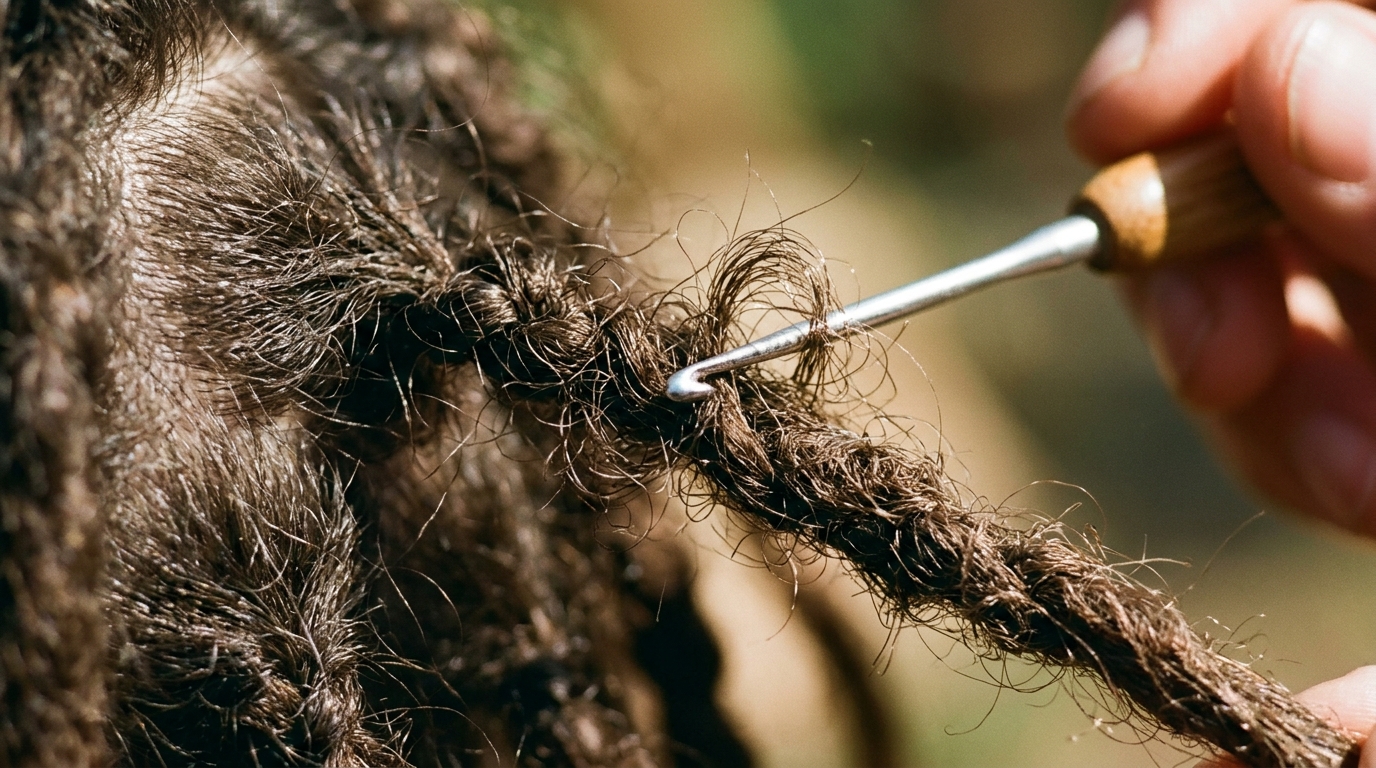
The crochet method is the most popular way to create instant locs, and for good reason — it produces tight, well-defined locs in a single session with no glue, no extensions required, and no awkward teenage phase. The technique uses a tiny barbed hook needle (a 0.5 mm or 0.75 mm crochet hook designed for hair) to repeatedly pull strands of hair through the center of each sectioned loc. Each pass of the hook compresses and interlocks the fibers, creating the dense, knotted structure that would otherwise take months to develop naturally.
The process starts with clean, dry, product-free hair. You section the hair into squares or diamonds depending on the size of locs you want, then twist each section into a rope shape before inserting the crochet hook and working through the entire length of the loc. Most people need between two and six hours for a full head, depending on hair thickness and the number of locs. The locs feel firm and look mature immediately after the session, though some frizz is normal as the hair settles over the first few weeks.
One important note: the crochet method does put mechanical stress on the hair shaft, so it is worth using the finest gauge hook available and not over-working each loc. Doing too many passes in one session can cause breakage, especially at the roots. A good rule of thumb is to stop once the loc feels consistently dense rather than trying to perfect every last flyaway strand on day one.

The 3 Pcs Dreadlock Crochet Hook Set (4.5★, $5.99) is a practical entry point for anyone trying the crochet method at home. The set includes three hook gauges (0.5 mm, 0.6 mm, and 0.75 mm), which lets you start with the finest hook for initial passes and move to a slightly larger gauge to fill in thicker sections. The handles are ergonomic enough for extended sessions, which matters when you are working through a full head of locs over several hours.
Method 2: Instant Loc Starter Kits
Instant loc starter kits bundle together everything you need for a crochet session in a single package — multiple hook sizes, sectioning clips, sometimes a rat-tail comb for clean parting, and occasionally a small amount of setting product. They are a good choice if you are new to the process and are not sure which hook gauge to start with, or if you want to give a full kit as a gift to someone beginning their loc journey. The value proposition is straightforward: buying a kit usually costs less than sourcing each component separately.
Beyond the basic crochet hook sets, some kits include latch hooks alongside the crochet needles. Latch hooks use a slightly different technique — rather than poking through the loc, the latch opens to grab a loop of hair and pull it back through — and some people find them easier to control for the first few sessions. Having both tool types in one kit lets you try both approaches and decide which feels more natural for your hands and your hair texture.
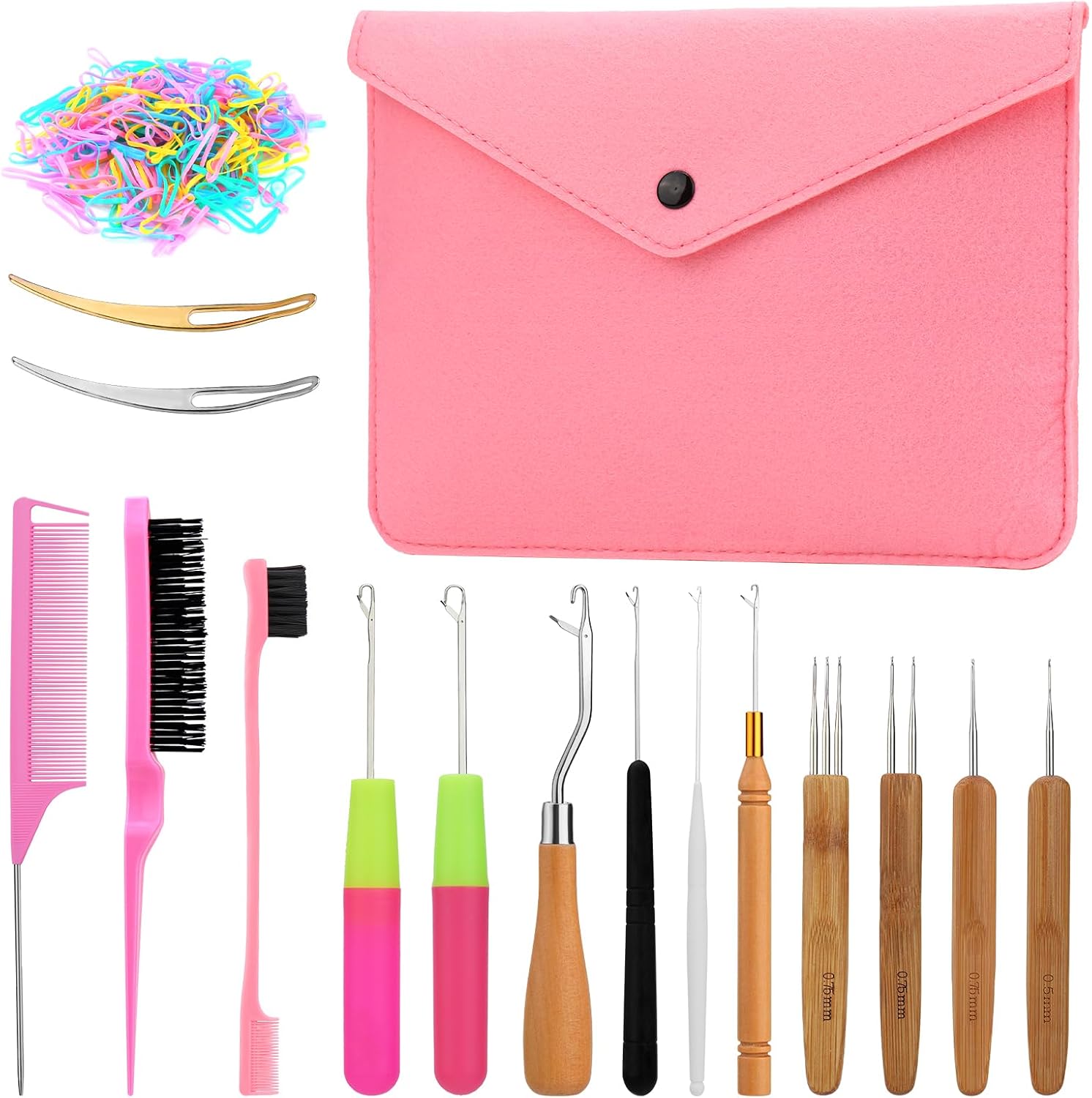
The 220 PCS Crochet Needle Kit for Locs (4.7★, $11.99) is one of the most comprehensive kits available at this price point. It includes a wide range of needle sizes, sectioning tools, and enough variety to handle different hair textures and loc sizes. At under $12, it eliminates the guesswork of buying individual tools and gives you everything you need to start your first session with confidence.
Method 3: Twist-and-Rip
The twist-and-rip method creates instant locs without any tools at all — just your hands. You take a section of hair, split it in two, twist both halves tightly in the same direction, then pull them apart. That ripping motion forces the hairs to cross and tangle at the point of separation, creating a knot that acts as the foundation of a loc. You repeat this motion down the length of the section until the entire strand has been worked through, then seal the ends by rubbing them between your palms. It is slower than the crochet method but gentler on the hair shaft, making it a good option for fine or fragile strands.
The main drawback of twist-and-rip is that the locs look less polished immediately after installation than crochet locs do. They tend to be slightly fuzzy and less uniform in diameter, especially if your hair is on the silkier end of the spectrum. They also take longer to tighten and mature — expect a few months of maintenance before they look as defined as crochet locs from day one. That said, many loc wearers prefer this method precisely because it creates a more organic, less identical look, and the reduced mechanical stress means healthier locs in the long run for people with fragile or chemically treated hair.
Setting and Maintaining Your Instant Locs
No matter which installation method you use, the products you apply in the first weeks and months make a significant difference to how quickly your locs tighten and how healthy they stay. The right combination of hold, moisture, and light refreshing spray keeps new locs looking defined without causing the buildup that can trap moisture and lead to mildew inside the loc. Here is a look at the three product categories worth having from day one — and how to find them referenced in our guide to the best starter products once your instant locs are in.

A quality locking gel is essential during the starter phase. The Jamaican Mango & Lime Start-A-Loc Locking Gel 16 oz (4.4★, $9.79) is formulated specifically to encourage new locs to tighten and hold their shape without leaving a greasy residue. Apply a small amount to each freshly palm-rolled loc and allow it to dry completely before sleeping — this prevents frizz from undoing your work overnight. This gel is water-soluble, so it rinses clean without leaving buildup inside the loc.

For locs that need a bit more hold during retwisting sessions, a light creme wax is the right tool. The Jamaican Mango & Lime Locking Creme Wax 16 oz (4.5★, $9.79) provides a firm but flexible grip that keeps the root area tidy between salon visits. Use it sparingly — a pea-sized amount per loc is usually enough — and only at the roots rather than through the entire length of the loc. Over-waxing is the most common mistake new loc wearers make, and it leads to buildup that is difficult to remove. If you want to explore everything you need to maintain your locs from day one, starter kits that pair gel and wax together are a cost-effective option.

Daily moisture is what keeps new locs from becoming dry and brittle in the weeks after installation. The Locsanity Daily Moisturizing Rosewater & Peppermint Spray 12 fl oz (4.6★, $24.99) is a lightweight mist that hydrates without softening the loc’s grip — an important distinction, since heavy conditioning sprays can cause freshly formed locs to loosen. The rosewater provides baseline moisture while the peppermint stimulates the scalp and keeps things fresh between wash days. Once you have the basics covered, it is worth reading up on softening new loc extensions after installation and the different ways to manage and style your new locs as they mature.
How to Choose Your Method
- Hair texture compatibility: Tight curl patterns (4a, 4b, 4c) work well with all three methods. Looser curl types (2c–3c) generally do better with crochet, which mechanically locks the hair regardless of its natural tendency to uncoil. Twist-and-rip on looser hair often results in locs that take much longer to mature and require very frequent maintenance in the early months.
- Permanence vs. temporary: All three methods create a permanent or semi-permanent style, but the crochet method is the most committed — reversing crochet locs is difficult and usually means cutting. Twist-and-rip locs can sometimes be carefully combed out in the very early stages if you change your mind. If you are uncertain about the long-term commitment, starting with a temporary style like two-strand twists gives you a feel for the aesthetic before you lock in permanently.
- DIY vs. salon: The crochet method and twist-and-rip can both be done at home with some practice, but the crochet method has a steeper learning curve and risks damage if done incorrectly. If this is your first time, consider having the first session done by a professional loc stylist and then maintaining at home from that point forward. Starter kits are well-suited to DIY maintenance once the locs are established.
Frequently Asked Questions
Instant locs are one of the most accessible ways to begin a loc journey, and the range of methods available means there is a realistic option for almost any hair type and lifestyle. Whether you choose the precision of the crochet method, the convenience of a full starter kit, or the gentleness of twist-and-rip, the most important factor is consistent aftercare once the locs are in place. Start with the right products, commit to a regular maintenance schedule, and your instant locs will continue to tighten and thrive for years to come.