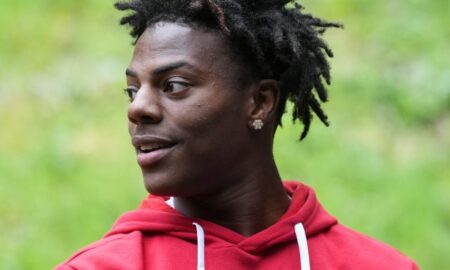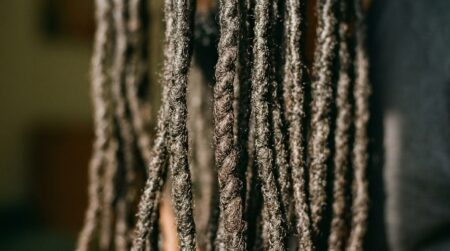

Jay-Z’s dreads are one of the most fascinating mid-career hair pivots in hip-hop. Shawn Carter spent the first 25 years of his public career in a clean-cut, low-faded silhouette. Then, around 2017, in his late forties, he simply stopped trimming his hair and let the locks form. By 2021 he was showing up at the Grammys with mature freeform dreadlocks that had already congoed into thick, irregular sections. The grey running through them, mixed with his Type 4B texture, gave his locks an instantly recognizable look that no other rapper has matched. This guide breaks down the timeline, the method (which is essentially “do nothing”), and how to recreate his approach.
Table of Contents
- Who is Jay-Z and why his loc journey is unusual
- Jay-Z dreads timeline: 2017 to 2026
- The Jay-Z dread method: textbook freeform
- How to get Jay-Z style dreads
- Jay-Z dreads vs other rappers
- What Jay-Z’s loc journey says culturally
Who is Jay-Z and why his loc journey is unusual
Shawn Corey Carter, born December 4, 1969 in Brooklyn, New York, became Jay-Z in the mid-nineties and has been one of the defining voices in rap for three decades. Co-founder of Roc-A-Fella Records, founder of Roc Nation, married to Beyoncé since 2008, the first hip-hop billionaire. For most of his career his hair was deliberately understated: low fade, sometimes a cap, never anything that competed with the suits and the boardroom aesthetic he had cultivated. The decision to grow locks in his late forties was therefore both visually striking and culturally meaningful.
Jay-Z dreads timeline: 2017 to 2026
Pre-2017: the corporate clean-cut era
From the Reasonable Doubt era in 1996 through the Magna Carta Holy Grail period (2013), Jay’s hair was always either short, faded, or hidden under a cap. The 4:44 album cycle in 2017 is when the first hint of grown-out hair starts appearing in press photos. This is a quiet shift, not a public announcement. It mirrors the album’s confessional, mid-life-reflection theme: a man taking stock and letting things grow.
2018-2019: the visible starter locs
At the European premiere of The Lion King in London in July 2019, Jay shows up with locks that are clearly starter-stage: defined sections forming, length still short, no maintenance work done on them. This is when most observers first realized he was growing dreads on purpose, not just letting his hair go untrimmed between haircuts. The look reads freeform from the start: irregular sizes, no obvious section pattern.
2020-2021: the congo moment
The defining moment in Jay-Z’s loc journey is the March 2021 Grammys, where he appeared next to Beyoncé with locks that had visibly congoed into roughly 20 thick sections, some of them clustering 5 or more individual locks together. Congos happen when adjacent locks fuse where they touch most often, especially at the crown. They are the signature of true freeform locks, and they cannot really be faked. Jay’s congoes were so pronounced that articles in mainstream press picked up on them. This was also when the gray throughout his locks became a public talking point.
2022-2024: settled and full
From 2022 onward, Jay-Z’s locks have stabilized into mid-length, dense, gray-shot freeform dreads. He wears them in a few configurations: loose with the front locks falling over his forehead (the Lion King premiere look), pushed back with a headband (which he has worn frequently and which became briefly a fashion moment in 2022), or tied loosely at the nape. There is no visible retwisting, palm-rolling, or interlocking. The locks behave like a natural ecosystem on his head.
2025-2026: long-term mature freeform
By 2026 the journey is roughly 9 years old. The locks have not grown as long as you would expect from 9 years of growth, which suggests that, like most freeform-wearers past a certain length, Jay occasionally trims the ends or that the congoing is absorbing growth into thickness rather than length. The gray has spread further through the locks, which now read silver-and-black rather than the original mostly-black. The overall silhouette is now squarely in mid-life-statesman territory: not styled, not fought, just lived in.
The Jay-Z dread method: textbook freeform
Like J Cole’s dreads, Jay-Z’s locks are the cleanest documented case of true freeform among major hip-hop figures. The technique, reverse-engineered from what you can see in photographs:
- Hair type: Type 4B (kinky, tight curl pattern). This is the texture that locks fastest and holds congos most distinctly. The same texture as Bob Marley and J Cole.
- Method: do nothing. Stop combing. Stop using detangling products. Allow the natural texture to mat into starter sections.
- Section pattern: none visible. No grid, no parts, no consistent sizing. Locks of widely different thicknesses sit next to each other on his head.
- Maintenance: periodic separation of the largest congos to prevent them from absorbing the entire head into one mat. Occasional washing with a residue-free shampoo.
- Moisturization: coconut oil or rose water spritz seems plausible based on the sheen visible in close-up press photos. Both are standard freeform-community choices because they do not leave residue.
How to get Jay-Z style dreads
This is the cheapest, easiest, and slowest way to get dreadlocks. The procedure is identical to the freeform recipe used by Cole or by Marley before him:
- Minimum hair length: 5-7 cm of Type 4 hair, slightly more for looser textures.
- Wash with a clarifying, residue-free shampoo and stop using all other hair products.
- Put away your combs and brushes. From this day forward, your fingers are your only styling tool.
- Continue washing every 7-10 days with the same residue-free shampoo. Sleep on a satin pillowcase to reduce friction breakage.
- At month 3-6, starter locks appear. Pull apart any congos larger than two fingers wide to prevent over-fusion.
- At month 12-18, you have visible mature starter locks. Around year 3-4, you have something close to Jay-Z’s current look.
For the full method walkthrough, see our guide on growing freeform dreadlocks naturally. For an understanding of how congos form and how to manage them, the Rastafarian historical context covered in our piece on how long Bob Marley grew his dreadlocks is the closest historical reference: Marley’s locks followed essentially the same logic.
Jay-Z dreads vs other rappers
- J Cole: similar freeform philosophy, but Cole started his journey in 2013 while Jay started in 2017. Cole’s locks are now 3-4 years more mature, with longer sections and more developed congos. Both wear them the same way: untouched. See J Cole dreads for the parallel.
- Quavo: the exact opposite. Quavo’s 100+ locks are tightly retwisted every few weeks. Jay-Z’s are left alone. See Quavo dreads for the contrast.
- Bob Marley: the historical reference. Marley wore freeform locks for 12-15 years until his death. Jay’s approach is the same, just compressed into a later-in-life timeline.
- 2 Chainz: longer and thicker than Jay, but with more shaping. See 2 Chainz dreads for what extreme length looks like over 20+ years.
- The roundup: our piece on rappers with dreadlocks and how to get them covers the wider comparison.
What Jay-Z’s loc journey says culturally
Jay-Z growing dreads in his late forties is not just a personal choice. For a black male artist who built his brand on corporate respectability (the suits, the championship-belt-with-tuxedo aesthetic), choosing to wear freeform locks in 2017 was a quiet rejection of the conformity he had embodied for decades. The locks read as a return to roots in the most literal sense: a Brooklyn-born artist letting his natural texture exist publicly after a quarter century of keeping it short and shaped. The fact that he wore them through the 2021 Grammys, on red carpets, and in his work with the Carter Foundation shows that the locks are not a temporary phase but a settled identity choice.
When did Jay-Z start growing dreadlocks?
Jay-Z began growing his dreadlocks around 2017, during the 4:44 album era. The first clearly visible starter locs appear in press photos from late 2018 to mid-2019. By the March 2021 Grammys, his locks had matured enough to show pronounced congos. As of 2026, his loc journey is roughly 9 years old.
Are Jay-Z’s dreads freeform?
Yes, Jay-Z’s dreadlocks are textbook freeform. There is no visible retwisting, palm-rolling, or interlocking in any press photo or music video appearance. The irregular section sizes, the natural congos (fused sections of multiple locks), and the absence of a defined root pattern are all clear freeform signatures. The maintenance is essentially washing, sleeping on satin, and occasionally pulling apart congos that get too large.
What are Jay-Z’s congos?
Congos are dreadlocks that have naturally fused together. They form when two or more adjacent locks touch repeatedly, especially at the crown of the head where pressure and movement are highest. At the 2021 Grammys, Jay-Z showed up with roughly 20 visible thick sections, several of which were congos containing 4-5 individual locks merged into one. Congos are the signature of long-term freeform locks and cannot be faked with rubber bands or styling tools.
How can I get dreads like Jay-Z?
Stop combing your hair, wash it weekly with a residue-free shampoo, and wait. Type 4 (afro) hair will show starter locks within 3-6 months. To match Jay-Z’s current look, expect at least 4-5 years of patience. Allow congos to form naturally for the most authentic version. Skip products, skip salons, skip maintenance. The look is achievable on any budget, the only cost is time.