
Retwisting Locs at Home: What You Need to Know Before You Start
If you want to retwist locs at home and get results that hold, it comes down to moisture level, product choice, and technique. Whether your locs are two months old or two years old, the basics are the same: new growth needs to be twisted back in a consistent direction before it has time to lock in the wrong pattern. We reviewed the most common questions from loc wearers and tested several retwist gels to put this together.
What Retwisting Actually Does to Your Locs
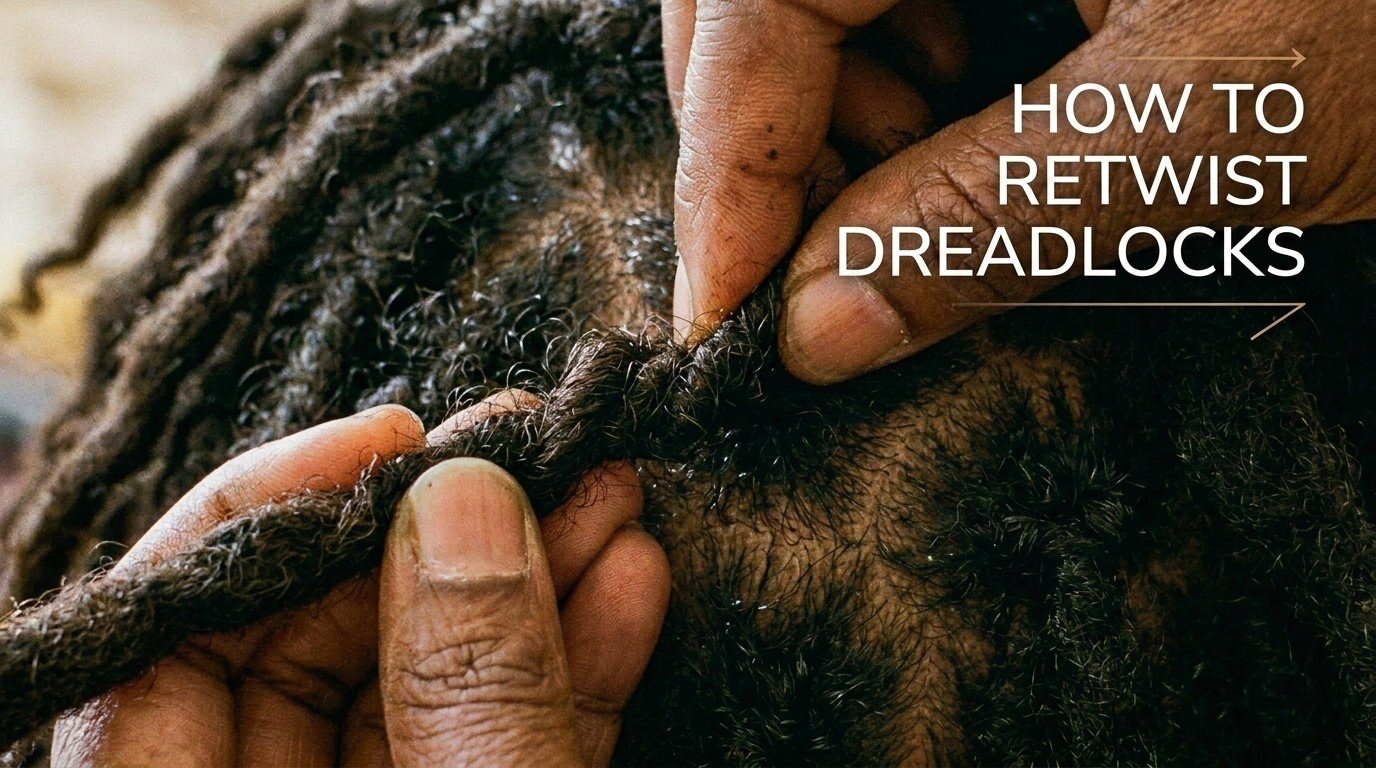
Every few weeks, your scalp produces new hair at the root. On its own, that new growth has no direction — it grows outward in whatever pattern your texture naturally wants. Retwisting takes that loose root section and winds it back into the existing loc, reinforcing the clockwise (or counterclockwise) rotation that gives each loc its shape. Over time, the twisted new growth locks into place and becomes part of the loc body.
Without regular retwisting, the roots stay loose and look messy, and the new hair can start to merge neighboring locs together — a problem called budding. On younger locs, skipping too many retwists can change the loc pattern before it has a chance to set. On mature locs, it mostly affects appearance: roots look frizzy and undefined, which makes well-grown locs look younger and less intentional than they are.
Retwisting also gives you a chance to check each loc individually — a good opportunity to catch any that are thinning at the root, merging with a neighbor, or developing buildup from previous products. Think of it as maintenance, not just styling.
What Do You Need to Retwist Your Locs Properly?
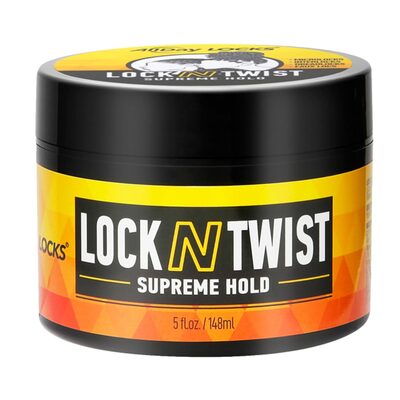
You do not need much. A rattail comb for clean parts, a few duckbill clips to hold sections in place while they dry, a spray bottle with water, and a retwist product. That last item is where people tend to overthink things.
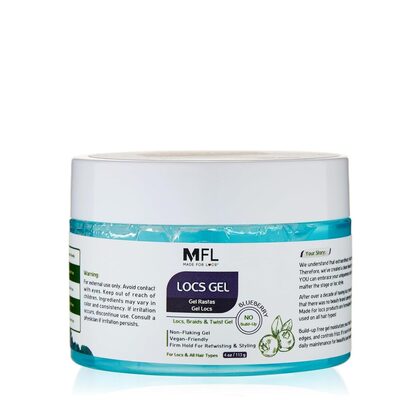
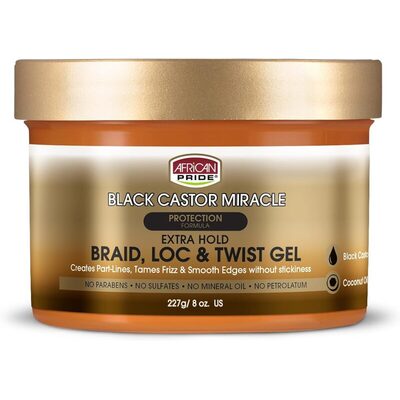
The product you use for a loc retwist should do two things: provide enough hold to keep the twist in place while the hair dries, and condition the hair without leaving a layer of residue that builds up over weeks. Gels are the most common choice because they dry clear and rinse clean. Pomades and butters work well too, especially on drier hair types, but they need to be rinsed thoroughly on wash day — anything oil-heavy that is not fully removed will attract lint and dull your locs over time.
A spray bottle is not optional. Retwisting on completely dry hair is difficult because the hair is less pliable and the product does not distribute evenly. Lightly damp hair — not wet — gives you the best grip and the cleanest-looking result. You can find a full overview of what works in our roundup of best dreadlock maintenance products if you want to compare options before buying.

How Do You Retwist Your Locs at Home Step by Step?
Start with freshly washed or lightly moisturized locs. If you are retwisting on a day between washes, mist the roots with water until they are slightly damp — not soaking. Working on wet hair leads to longer dry times and can cause mildew inside thick locs if they do not dry completely.
- Part a small section at the root using the tail end of a rattail comb. The section should match the natural base size of that loc.
- Apply a small amount of retwist gel or pomade directly to the root, working it in with your fingertips.
- Pinch the root between your thumb and index finger and roll the loc in the direction it was originally twisted. Most locs go clockwise — follow the pattern already there, never reverse it.
- Wind slowly from root toward the body of the loc. You are not re-doing the whole thing, just locking in the new growth.
- Clip the twisted section flat against the head with a duckbill clip to hold the shape while it dries.
- Work through all sections this way, then allow the hair to air dry fully or use a hooded dryer on low heat. Remove clips only when the roots feel completely dry.
The whole process takes 45 minutes to two hours depending on how much new growth you have and how many locs. A lightweight pomade is easier to apply section by section without your fingers getting sticky. If starting your locs with the right technique from day one, retwisting becomes a more straightforward routine over time.
How Often Should You Retwist Your Locs?
Most people retwist every four to six weeks, and that range works for the majority of hair types. Fast-growing hair may benefit from going every three weeks; slower-growing hair can stretch to eight weeks without the roots looking neglected. The clearest signal that you need a retwist is when the roots look visibly loose and the new growth is longer than about a centimeter.
Over-retwisting is a real issue that does not get talked about enough. When you retwist the same root too frequently — say, every week — the constant tension at the base can cause traction damage over time. This shows up first as thinning at the root and, in persistent cases, as receding edges. If your roots look completely fine, skip the retwist that week.
Lifestyle also plays a role. If you work out often or swim regularly, the roots will look frizzy faster because sweat and water loosen the twist. In that case, go by appearance rather than a fixed schedule. Keeping a consistent routine is easier when you have the right products on hand — good dreadlock maintenance kits often cover everything you need in one purchase.
Retwisting Mistakes That Silently Damage Your Dreads
The most common mistake is twisting too tight. A retwist should feel secure, not uncomfortable. If the scalp feels pulled or sore after a session, the tension was too high. Consistent over-twisting at the same root points leads to breakage and, eventually, loc thinning that is hard to reverse. Use gentle, even pressure — the clip does the holding work, not the tightness of the twist.
Second is product buildup. Many people reach for heavy waxes or thick pomades because they seem like they hold better. They do hold — but they do not wash out cleanly. Over months, waxy residue accumulates inside the loc body, making locs heavy, dull, and prone to lint. A water-soluble gel that rinses fully on wash day is almost always the better long-term choice. Products like Lion Locs were formulated specifically to avoid that buildup problem.
Third is releasing clips before the hair is completely dry. Locs hold their retwisted shape while the product and moisture dry into the structure. If you take the clips out while anything is still damp, the root will unravel. This is easy to get wrong with thick or dense locs, where the inner part stays moist long after the surface feels dry. When in doubt, add another 30 minutes under a hooded dryer.
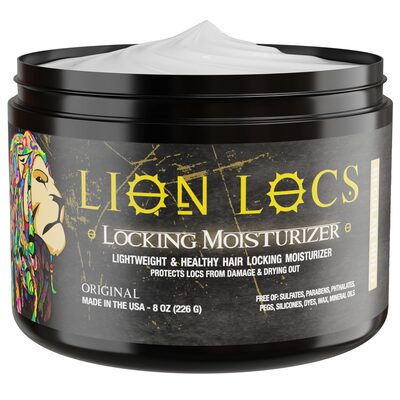
How to Choose
Picking a retwist product is simpler than it looks. Three things actually matter:
- Hold: medium-to-firm gel or butter. Young locs need more grip to stay put; mature locs can get away with something lighter.
- Residue: water-soluble only. Wax-heavy products don’t rinse clean and will dull your locs month after month.
- Conditioning: look for shea butter, aloe vera, or glycerin. Retwisting stresses the same root points repeatedly, and a formula with some moisture in it does less damage long term.
A good routine beats any single product. Keep your retwist sessions consistent, watch the tension you apply, and let the roots dry all the way before releasing them.
How often should you retwist your locs?
Most people retwist every 4 to 6 weeks, depending on how fast their hair grows and how neat they want their roots to look. Retwisting too often puts too much tension on the root and can cause thinning over time.
Can you retwist locs on dry hair?
You can, but slightly damp hair gives the best results. A small amount of loc gel or butter on damp hair holds the twist longer and dries into a clean, defined look. Completely dry hair is harder to work with and the retwist tends to unravel faster.