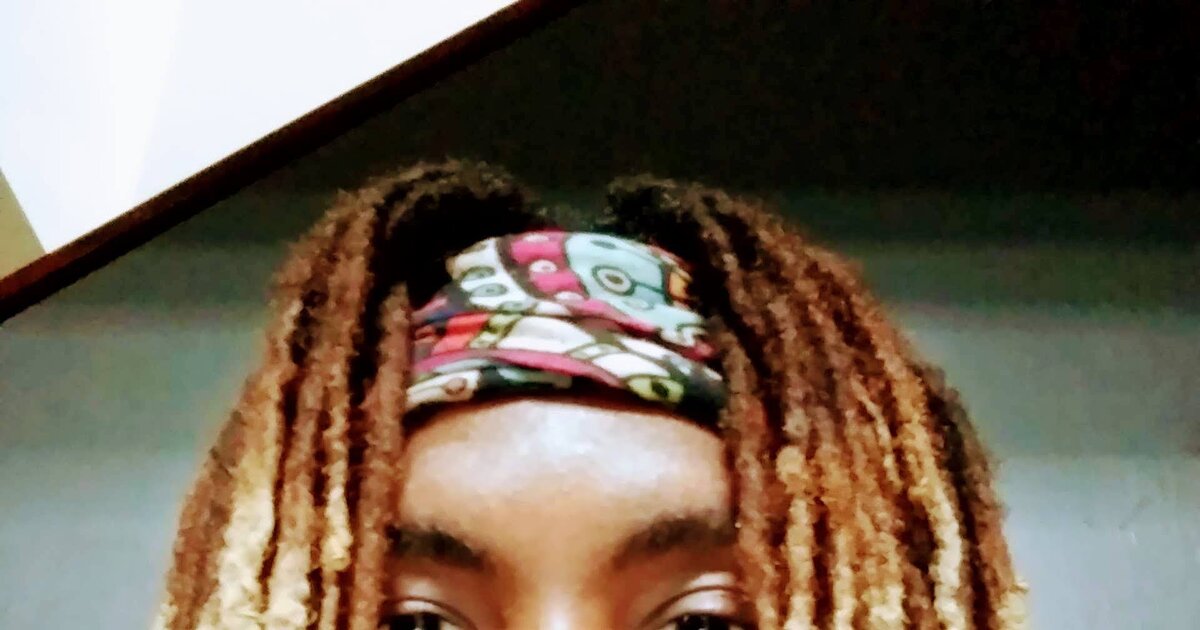
A landmark win for the locs community in Pennsylvania
Pennsylvania has quietly joined the line of states that treat locs as part of who someone is, not as a reason to keep them out of a classroom or off a payroll. The Pennsylvania CROWN Act, signed by Governor Josh Shapiro on November 25, 2025, took effect on January 24, 2026, and the implementation rules for schools and workplaces became fully enforceable at the end of March 2026. The amended text adds natural hair texture, locs, braids, twists, knots, and traditional head coverings to the protected categories in the Pennsylvania Human Relations Act. For people who have spent years tucking their locs back before a meeting or pulling them up for a job interview, the shift is more than legal. It is an acknowledgement, written down at last, that wearing your hair on your own terms cannot be the reason someone closes a door. If you want background reading on what people in the community have been up against for decades, our piece on facing discrimination over dreadlocks walks through the long version.
What actually changed when the rules took effect?
The bill itself reads short, but its reach is wide. The amended Pennsylvania Human Relations Act now defines race to include “natural hair texture, protective hairstyles, and hair coverings traditionally associated with race and religious creed.” That language puts locs, braids, twists, coils, Bantu knots, and afros inside the same protected class as skin color or national origin. Anyone employed by a Pennsylvania business with at least four staff members on its payroll is covered, along with students in public schools and tenants of public housing. The Pennsylvania Human Relations Commission, the same body that has handled racial complaints since 1955, will now take in dossiers about a fired manager whose locs were called “messy” or a high-schooler told to retwist before graduation.
State Representative La’Tasha Mayes, who introduced the legislation back in 2018 after a Black student was sent home for braids, described the new statute as “changing the trajectory of the future of our children.” House Speaker Joanna McClinton put it more bluntly during the signing ceremony: “They will not look at your hair and decide you can’t work here.” Pennsylvania becomes the 28th state to enact a CROWN-style law, joining California, New York, New Jersey, and most of the East Coast in formally recognising that locs are protected styling, not a workplace problem. The story of how locs were ever framed that way is much older than the bill itself, and worth understanding before you walk into any HR conversation. Our long-read on the true origin of dreadlocks in Kenya and Rasta culture sits right next to that conversation.
The law has limits worth knowing. Religious dress codes that apply uniformly across all employees, safety-related hair containment rules in specific occupations like food service or operating heavy machinery, and the actions of employers with fewer than four staff sit outside the new statute. Religious head coverings are still protected by separate federal law. Most legal analysts agree the new Pennsylvania language is broad enough to cover almost all standard workplace and school settings, and the carve-outs are narrow. The text is also retroactive in the sense that any disciplinary action taken after March 31, 2026, on the basis of locs or another protected style, is reviewable, even if the original employee handbook was written years earlier.
How did locs become a legal battleground in the first place?
You do not pass a law about hair without a long history behind it. Locs have been worn for millennia, from the long matted strands of the Ethiopian Beta Israel to the Sadhu ascetics of South Asia and the Nazirite vow at the heart of Rastafarian identity, a thread we trace in Bob Marley’s dreadlocks length history. In the United States, the stylistic celebration has always run parallel to a quieter pattern of discipline. The 2019 study commissioned by the original CROWN coalition found that Black women with locs and braids were 80 percent more likely to report having to change their natural hair to fit at the office.
In 2018, a high-school wrestler in New Jersey was forced to cut his locs on the mat before a match. The video travelled fast, and that single clip helped push CROWN legislation onto state agendas across the country. Pennsylvania’s 2022 numbers, gathered by its own Human Relations Commission, show 916 race complaints connected directly to hair texture and styling. Add to that the cumulative cost: buying flatteners, missing pay during a last-minute salon detour, accepting a smaller job offer to avoid the conversation, walking out of an interview because someone called your locs “unprofessional.” It is not abstract policy. Advocacy groups in Harrisburg treated the signing ceremony as more than symbolic because, for the families they represent, the law closes a door that had been left half-open for decades.
Pennsylvania just proved what loc wearers have always known: hair is identity, and protecting it means protecting people.
What does the cultural ripple look like beyond one state line?
A 28th state matters. The original CROWN Act passed in California in 2019. Five years later, more than half of all American adults live in a CROWN state. Federal legislation has stalled twice in the Senate, so each new state that joins the list reshapes the map the federal courts will eventually have to look at. For the locs community, the legal calculus translates into something more tangible: a hairstyle that used to require quiet negotiation is now backed by enforceable language.
Photographers and stylists in Philadelphia and Pittsburgh have already reported a wave of corporate headshot sessions where employees who used to pin their locs back are now wearing them out for the first time. A few Pennsylvania school districts updated their student dress codes within weeks of March 31, explicitly listing locs, braids and twists as acceptable. HR consultancies are rewriting onboarding manuals. A small but growing number of Black-owned salons in the state report new clients walking in with paperwork from their employer asking what a “protective style” actually is, and our 50+ dreadlock dictionary words everyone should know is the answer most of them point to. The vocabulary itself, long internal to the community, is finally moving into shared professional language.
Beyond Pennsylvania, the federal CROWN Act bill itself has been reintroduced twice this congressional cycle, and advocacy groups expect the Pennsylvania victory to add another data point in those hearings. Pennsylvania, with its mix of dense urban populations and large rural school districts, is exactly the kind of state federal lawmakers will cite when they argue that hair protections are not a coastal idea. The cultural side effects are quieter but already visible: Black women in management roles in Philadelphia hospitals report being asked, for the first time, to teach colleagues the difference between locs and twists during diversity sessions, instead of being pulled aside to “soften” their own hair.
How does a hair-bias complaint actually work in Pennsylvania?
Knowing the law exists and knowing how to use it are two different things. A complaint under the Pennsylvania CROWN Act starts at the Pennsylvania Human Relations Commission, the same agency that has handled every other race-based filing in the state for nearly seventy years. You have 180 days from the incident to file, and the process opens with a free intake form online or by phone. No lawyer is required at this stage, though several Black advocacy groups in Philadelphia and Pittsburgh now offer free help drafting the narrative. The Commission then assigns an investigator who collects documentation from both sides over the following weeks.
Outcomes range from a formal conciliation, where the employer or school agrees to revise its policy, to a public hearing that can order back pay, reinstatement, or fines. The state has been clear that the goal is education first and litigation second. Several school districts that updated their codes after March 31 did so without a single complaint being filed against them, just from training sessions and parent-led community pressure. The Pennsylvania Human Relations Commission has also announced a public dashboard tracking the volume and resolution of hair-related complaints, the first state agency to do so. That data set, expected to start publishing in the third quarter of 2026, will become the cleanest evidence yet of how often hair bias still shows up in American workplaces and schools.
How can you carry that energy into your own loc journey?
The law is a backdrop. How you wear your locs every day is the foreground. If you are about to start, the timing has rarely been better. Pick a method that fits your hair texture and your patience, and lean on solid maintenance habits early. Whether you go with the comb-coil technique, two-strand twists, freeform locs, or the instant locs route, give your scalp two to three weeks of healing between any tight retwist sessions, and resist the urge to overdo the gel in the first six months.
For people already deep into the journey, the headlines are a quiet reminder to document your work. Keep timestamped photos. Save your salon receipts. Store any written employer comments about your hair, even the ones that sounded harmless at the time. If a complaint ever lands at the Pennsylvania Human Relations Commission, dated proof matters. And whichever stage you sit at, a regular wash routine, a residue-free shampoo, and a light-hold gel will outperform fancy products and stress in equal measure. The point of the Pennsylvania CROWN Act is not to make your locs perfect. It is to remove perfection from the conversation entirely, so you can focus on the things that actually grow your hair.
Key Takeaways
The fight to wear locs without apology has moved another step forward with the Pennsylvania CROWN Act, and the cultural ripple goes well beyond one state line. Pennsylvania’s signature is one among many, but it lands at a moment when locs have never been more visible on stages, in boardrooms, and in courtroom benches. If you want to keep reading, our pieces on what dreadlocks actually are and on the Kenyan Mau Mau roots of the style sit on the same shelf as this win. Wear yours the way you want to wear yours.
When did the Pennsylvania CROWN Act take effect for locs?
Governor Josh Shapiro signed the bill on November 25, 2025, and the law went into force on January 24, 2026. Implementation rules for schools and workplaces became enforceable at the end of March 2026, giving the Pennsylvania Human Relations Commission the authority to handle hair-bias complaints.
Does the law cover dreadlocks in private workplaces?
Yes. The CROWN Act applies to every Pennsylvania employer with four or more employees, plus public schools and housing. Locs, braids, twists, coils, Bantu knots, afros, and protective head coverings are all listed as protected styles in the amended statute.